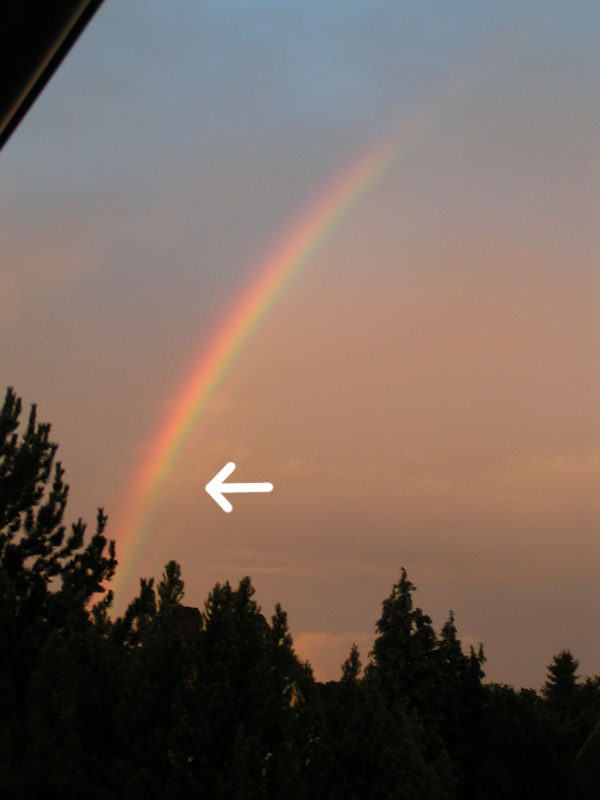
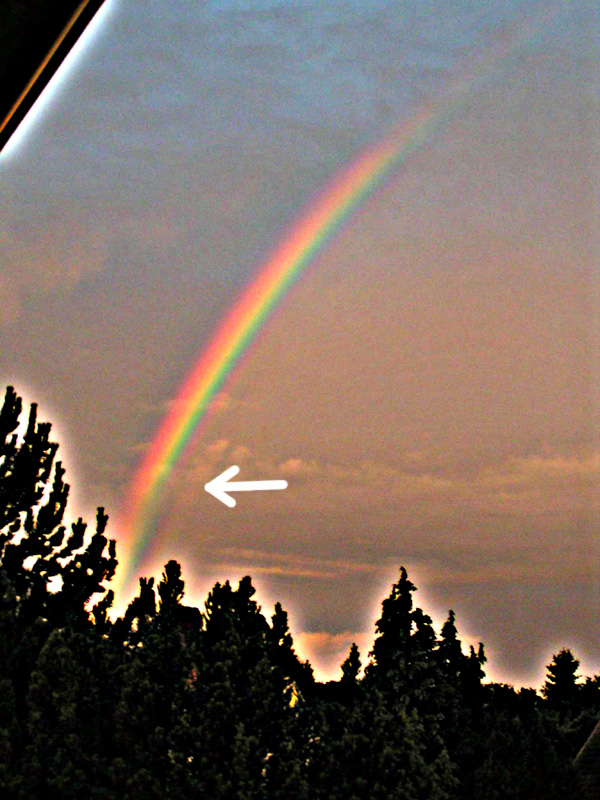
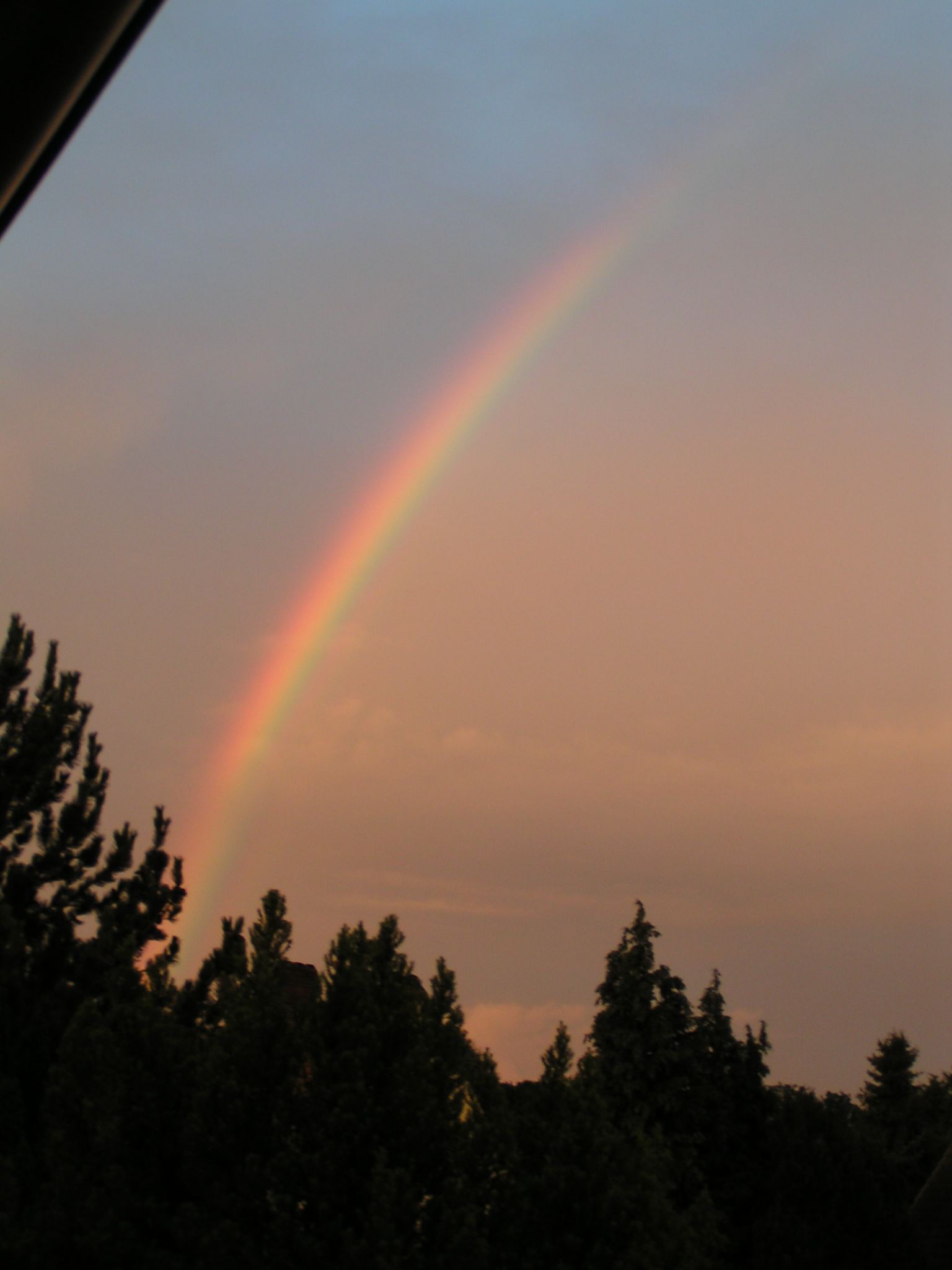
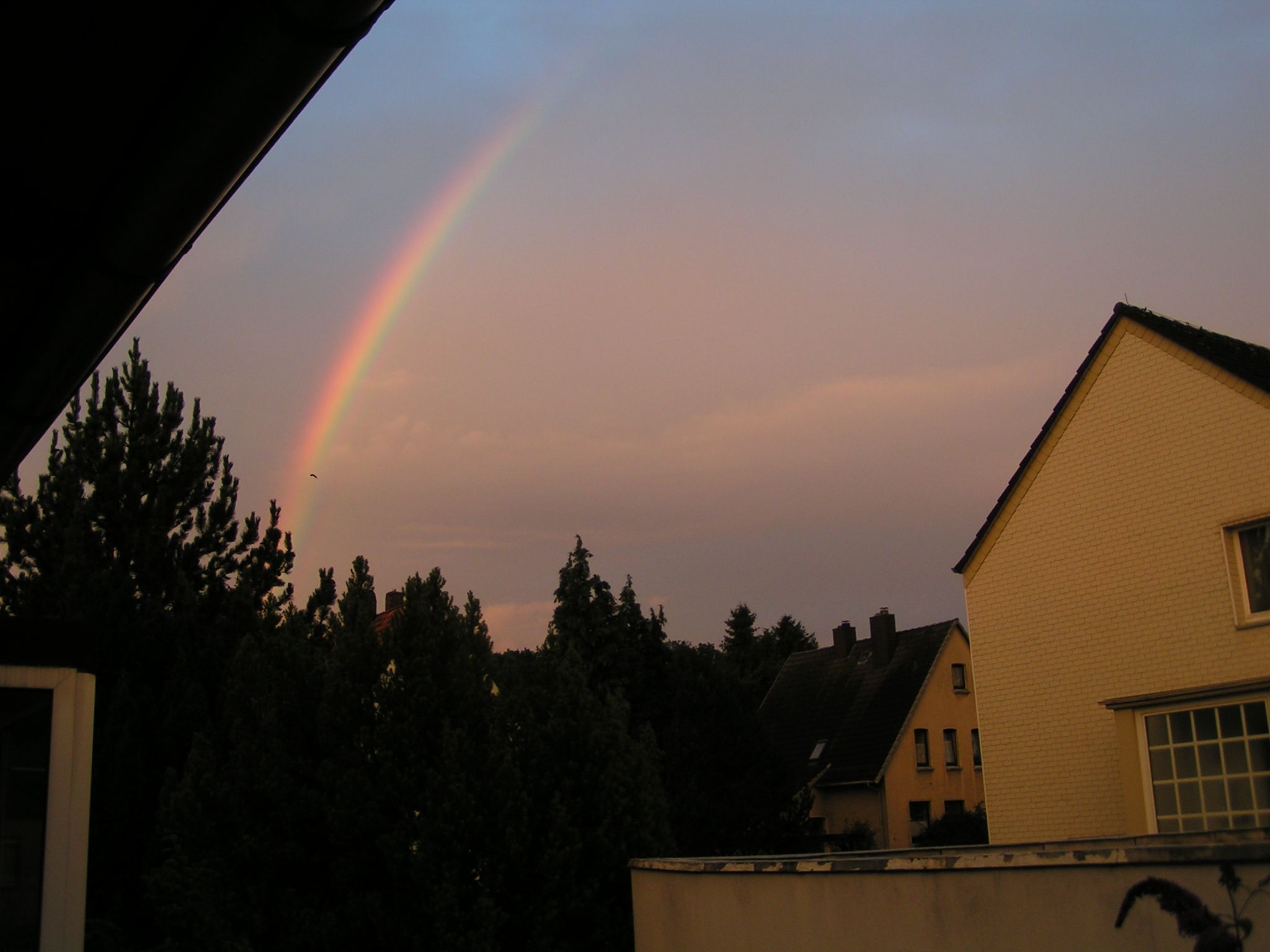
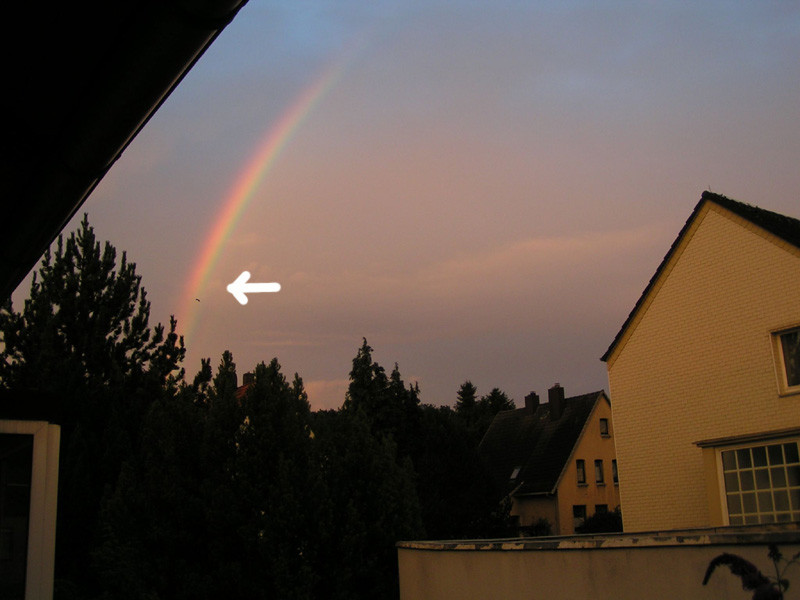
On August 31st at 01:00 I took some long-time exposures of the Westerhever Lighthouse in Nordfriesland (Germany). It was raining a bit but this didn't matter because I wanted to display the rays of the lighthouse. Home again I reviewed the photos and was a bit surprised about a kind of arc, originating at a point in height of the lantern room and sloping downwards until it ends +/- horizontal (see pictures 1 2 3). I thought it could be a type of refraction phenomena but I couldn't explain to me what is was exactly. So I placed the pictures in the Meteoros-forum. Mark Vornhusen and Christian Fenn told me, that this arc is a type of rainbow called "reverse lamp-rainbow" and that these photos are probably the first displaying this phenomena. Both a 42 degree arc as well as a 51 degree arc are to be seen at the pictures.
 The rainbows originates from the horizontal Lighthouse-born lightplain cutting the hull of the "Minnaert-cigar", an apple like shaped figure that describes all those points in which light coming from a source of light is reflectet in an angle of 42° respectively 51° to an Observer. In case of an usual source of light at every point of the Minneart-cigar a rainbow is being generated. But because of overlaying of these rainbows the colour-addition leads to a white light and no rainbow can be seen. However the thin light-layer of the lighthouse-beam only allows forming of rainbows at a small window of the minnaert-cigar and the rainbow becomes visible.
Author: Achim Christoph